
Affordability Challenges in Idaho
Like many in the US, Idaho families across the state are struggling to make ends meet. Let’s crunch some numbers to see why.
The annual median family income in Idaho was $8,026/mo based on the US Census Bureau estimates. Half of families make more than this and half make less. According to the MIT Living Wage Calculator, the average living expenses for a family of 4, with two working adults and two children in daycare, need $8,709/mo to cover the essentials of housing, healthcare and so on. This is a no frills budget, no vacations or eating out, just the bare essentials.
These figures show a shortfall of almost $600/mo for about half of Idaho families.
See the graph below for a breakdown in expenses.
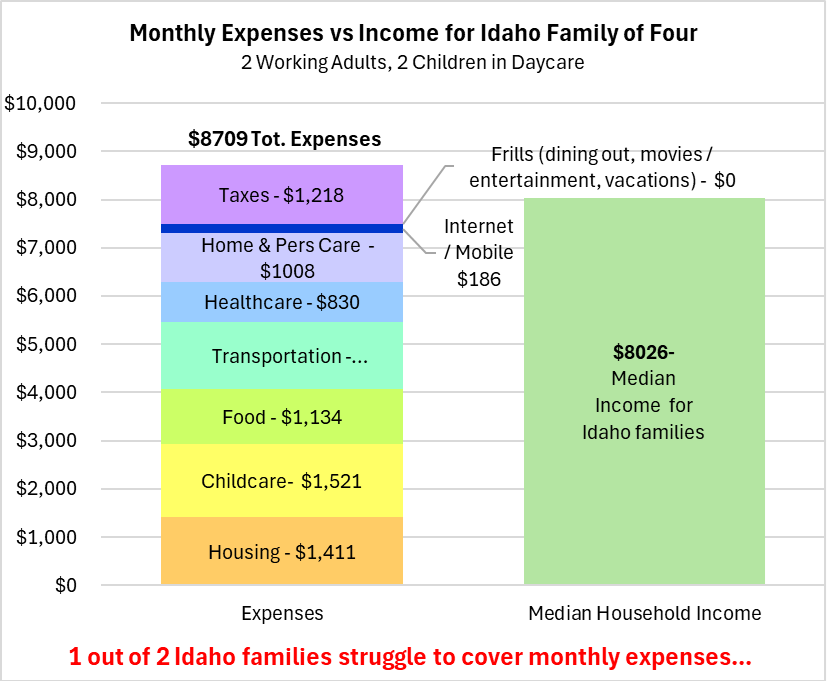
Sources: MIT Living Wage Calculator - https://livingwage.mit.edu/states/16 , Feb 2026
US Census Bureau - https://data.census.gov/profile/Idaho?g=040XX00US16 ,Latest date available 2024
Key Cost Drivers of Affordability & Impact of 2026 Legislative Session
The bills evaluated for the affordability index cover many of the items shown in the graphic. In general, the 2026 Legislative Session did little to improve affordability for Idahoans. Due to ongoing tax cuts, funding for many programs that help Idahoans across the state were reduced or cut altogether.
Housing
Housing remains one of the most significant affordability challenges. NOVA Idaho supported legislation aimed to increase housing supply by streamlining approvals and allowing more diverse housing types (such as accessory dwelling units and smaller lots). These efforts will help over time, but are unlikely to reduce costs in the short term. Childcare
Note the cost is among the highest in the family’s monthly basic needs budget, yet no action was taken at the state level to reduce the high cost of childcare during the 2026 session.
Healthcare
Many Idahoans have already seen health insurance premium increases - sometime double - due to federal cuts to ACA enhanced subsidies. Revenue shortfalls have resulted in cuts to programs serving vulnerable populations. These cuts, combined with new work requirements and frequent eligibility reviews, will reduce access to care and increase out-of-pocket costs. Many will see healthcare costs go up or be forced to drop coverage all together, resulting in reliance on emergency care - the most expensive option available.
Food Access
Minimal efforts were made to improve access to food. Partial funding was restored for a Senior Nutrition program. Additional administrative hurdles will make it harder for families to receive SNAP assistance and likely disqualify them. This hardship is made worse by increased food production costs due to tariffs and the Iran war. Transportation
Transportation costs are rising due to higher fuel prices and longer commute distances, particularly as families move farther from their places of employment in search of affordable housing.
Education
Education plays a long-term role in improving economic stability. Investments in career technical education and workforce training can help increase earning potential, while cuts to these programs may limit future opportunities. NOVA Idaho’s affordability index supported partial funding restoration for Career Technical Training in high schools, and restoring tuition assistance for National Guard members. We opposed budget cuts to which limit opportunities for students in rural areas, and reallocation of funds away from successful programs designed to support students post high school training pursuits which improve their chances at achieving long-term economic stability.Wages
Wage growth is the other side of the affordability coin. Nothing was proposed this legislative session to increase wages.